NFPA 1 Section 14.13 Exit Emergency Lighting Requirements
Quick Answer: NFPA 1 Section 14.13 sets the baseline for emergency lighting so people can find a safe path out when normal power fails. The big idea is simple: exit emergency lighting must stay reliable, tested, and ready. Done well, backup lighting fire safety protects people, supports compliance, and keeps business moving.
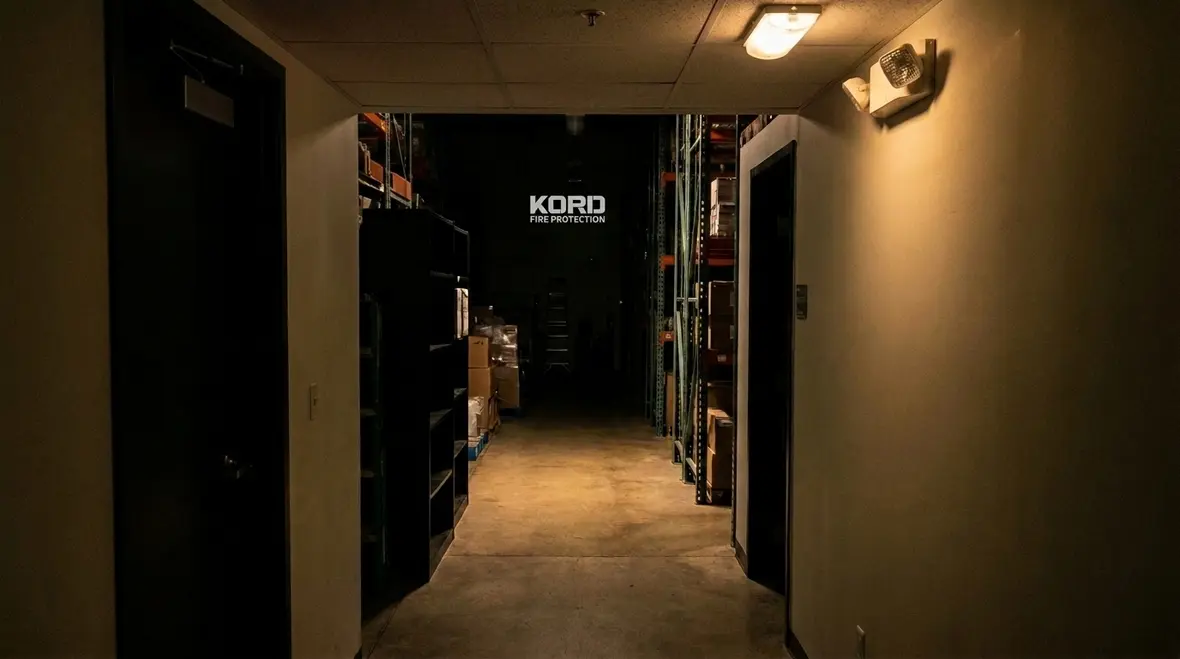
In the world of emergency lighting NFPA code compliance, the stakes are not glamorous, but they are serious. When power drops, smoke builds, and panic starts to rise, exit emergency lighting becomes the quiet hero of the building. It guides workers, customers, and visitors to safety with calm, clear light. For industrial, retail, and commercial facilities, backup lighting fire safety is not just a box to tick. It is part of a building’s life support system, and yes, it matters even more than the coffee machine during an outage.
Near the top of any smart compliance plan, it also helps to connect emergency lighting to broader full fire protection services, because lighting works best when it is supported as part of one coordinated life safety strategy rather than treated like the lonely cousin of the exit sign. Facilities that align inspections, maintenance, repairs, and code planning across systems usually find fewer surprises waiting in the dark. ([kordfire.com](https://kordfire.com/full-fire-protection-services/?utm_source=openai))
What NFPA 1 Section 14.13 Means in Plain English
NFPA 1 Section 14.13 focuses on emergency illumination so people can move safely during a power loss or fire event. In practical terms, the code expects lighting to activate when normal power fails and continue long enough for safe exit. It also expects light levels and placement to support clear movement through exit routes, stairs, corridors, and final discharge points.
That means a facility cannot rely on “it should be fine.” Fire safety does not enjoy hopeful thinking. Instead, the lighting system must perform when the building is at its worst moment. For sites with warehouse aisles, loading docks, long retail runs, or plant rooms, the system must be planned for real use, not just neat drawings on paper.
What this looks like during a real outage
When normal power disappears, people do not pause to admire code language. They look for a visible path, a clear door, and enough light to avoid becoming one with the nearest obstacle. That is why emergency illumination is all about performance under pressure. A compliant system helps occupants make quick decisions, recognize direction changes, and move with less confusion even when conditions are noisy, smoky, or generally trying their best to ruin everyone’s day.
Why Exit Emergency Lighting Matters in Busy Facilities
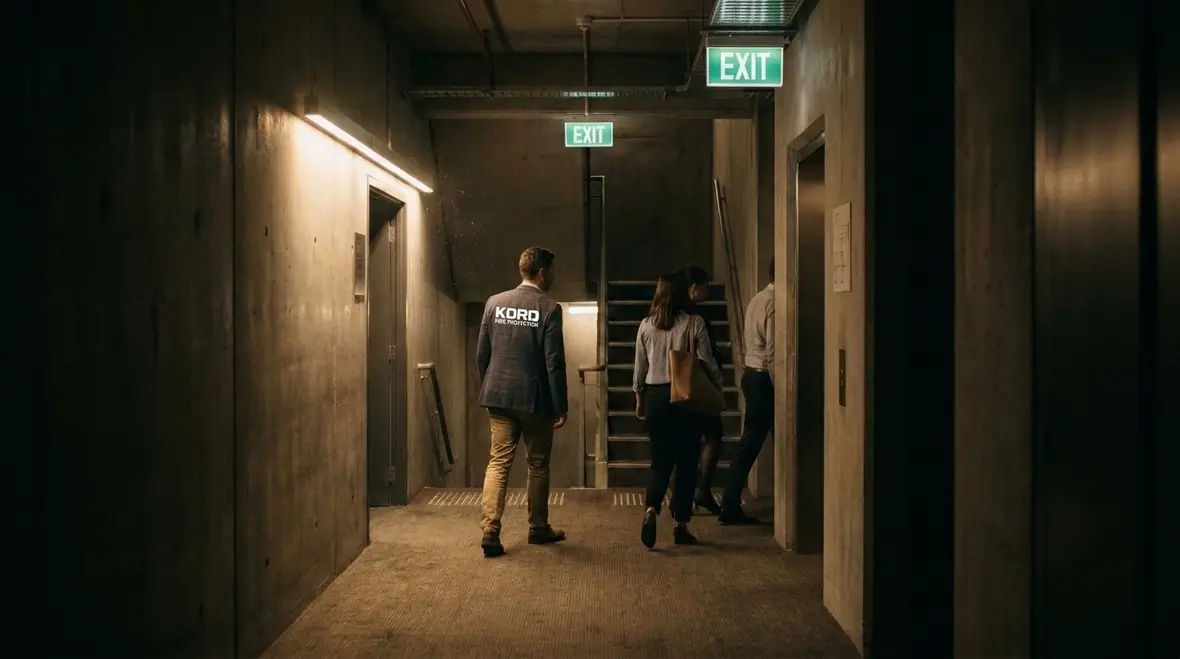
Exit emergency lighting does more than show a door. It reduces confusion, slows panic, and helps people avoid hazards like machinery, spills, stairs, and blocked paths. In a commercial site, that can protect employees and visitors. In an industrial setting, it can also help control movement near live plant, storage zones, and restricted areas.
Because many facilities run long hours, emergency lighting also supports after hours work, maintenance, and shift changes. As a result, the system must work in many conditions, not just during a textbook drill with perfect weather and a polite fire marshal.
Busy buildings create busy risks
A quiet office after lunch presents one level of evacuation challenge. A warehouse during loading, a retail floor during a sale, or a mixed-use commercial property during peak occupancy is a different animal entirely. People may be unfamiliar with alternate exits. Aisles may be crowded. Equipment, inventory, and temporary displays can interrupt clean sightlines. Good emergency lighting helps cut through that mess by giving occupants steady visual cues instead of forcing them to improvise a route under stress.
Kord Fire Protection’s emergency lighting service content consistently emphasizes testing, repair, and ongoing reliability planning for emergency exit light systems, which reinforces why busy facilities should treat these fixtures as active life safety assets rather than passive decorations screwed into the wall. ([kordfire.com](https://kordfire.com/emergency-lighting-for-fire-safety-and-reliable-service/?utm_source=openai))
How the Code Shapes Design and Placement
NFPA 1 Section 14.13 places strong weight on where lights are installed and how they cover the route to safety. Therefore, designers and fire protection teams must think about the full path, from the point of failure to the outside assembly area. If a corridor turns, a stair changes level, or a doorway opens into a storage area, the lighting plan must still guide people without guesswork.
Good design also means the system supports the building’s real layout. For example, retail stores with high shelving, warehouses with racking, and commercial sites with multiple exits all need lighting that matches their travel paths. In addition, the code is not about making the place look like a runway. It is about making sure people can see where to go when everything else goes dark.
Design details that matter more than they seem
Placement becomes especially important near corners, stair landings, door swings, equipment transitions, and any point where an occupant must make a decision. Kord Fire Protection’s emergency egress lighting design guidance highlights spacing, illumination levels, sign placement, wiring practices, battery health, and inspection routines as key considerations from the start. Their placement and coverage article also points to the importance of aligning emergency lighting with the actual path of egress rather than assuming a few fixtures will somehow solve everything by vibes alone. ([kordfire.com](https://kordfire.com/emergency-egress-lighting-design-standards-from-day-one/?utm_source=openai))
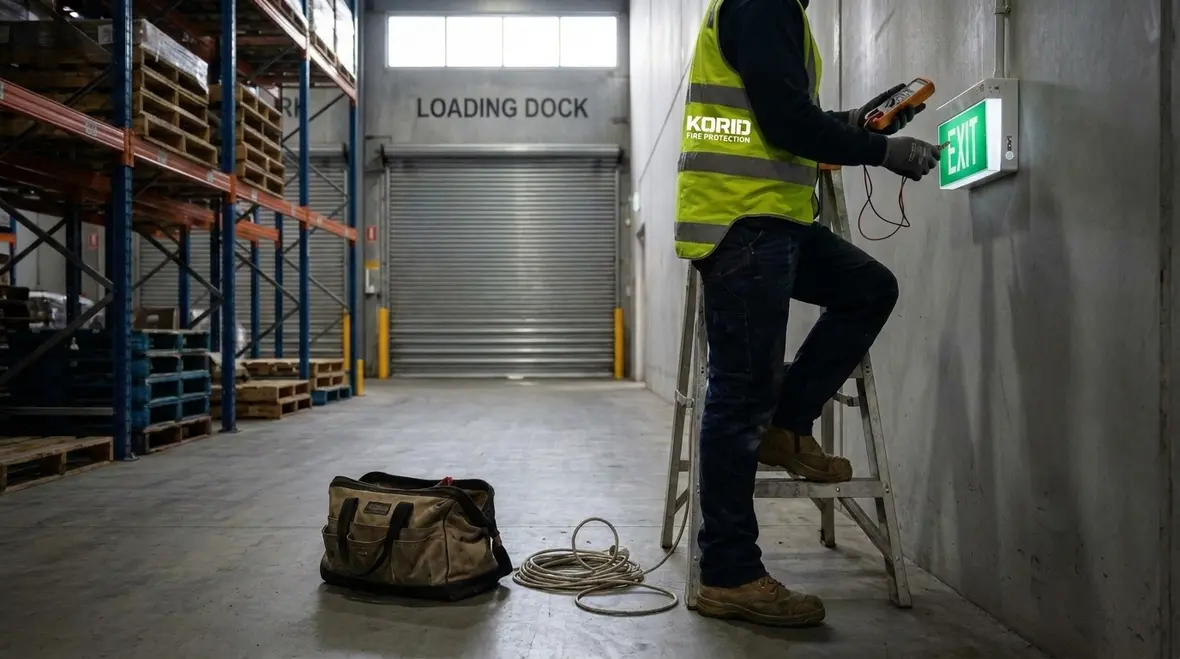
Key Checks for Backup Lighting Fire Safety
Facility teams should review several core points when managing emergency lighting systems:
- Activation: Lights must come on when normal power fails.
- Coverage: Exit paths, stairs, and key decision points must stay visible.
- Duration: The system must hold illumination long enough for safe evacuation.
- Testing: Routine checks must confirm batteries, fittings, and controls still work.
- Maintenance: Failed lamps, weak batteries, and damaged units need prompt repair.
These checks sound simple, yet they often reveal weak spots. A light may work during the day, then fail when the battery is old or the fitting is hidden behind dust. In industrial and commercial environments, that kind of surprise is about as welcome as a power cut during a product launch.
Common failures usually start small
Kord Fire Protection’s articles on common emergency lighting failures and troubleshooting point to quiet battery decline, wiring issues, skipped testing, and less-than-ideal installation as frequent reasons systems let people down. That is useful because it reminds facility teams that major life safety failures often start as minor maintenance tasks someone thought could wait until next week, then next month, then apparently the end of time. ([kordfire.com](https://kordfire.com/top-10-common-emergency-lighting-failures-and-prevention/?utm_source=openai))
Where a Fire Protection Partner Adds Real Value
This is where Kord Fire Protection can become a vital partner. A skilled fire protection team helps facilities assess existing lighting, identify gaps, and improve emergency readiness before an incident exposes a problem. Moreover, a partner can help with installation planning, compliance checks, testing, documentation, and ongoing service.
Facility need
Reliable lighting that supports safe evacuation, works during outages, and keeps pathways readable when a building is under stress.
Kord Fire Protection value
Expert assessment, testing, maintenance, practical compliance support, and service routines that help emergency lighting stay ready when it actually counts.
For busy sites, this support saves time and lowers risk. Instead of managing lighting as an afterthought, the facility can treat it as part of a wider fire safety plan. That approach helps reduce downtime, improves confidence during audits, and keeps the building ready for the real world, which never behaves like the training slide deck.
For readers who want broader context on code-driven fire prevention, Kord Fire Protection also has a related guide on NFPA 1 fire prevention and safety, which fits naturally alongside emergency lighting compliance and helps connect this one requirement to the larger code picture. ([kordfire.com](https://kordfire.com/emergency-lighting-for-fire-safety-and-reliable-service/?utm_source=openai))
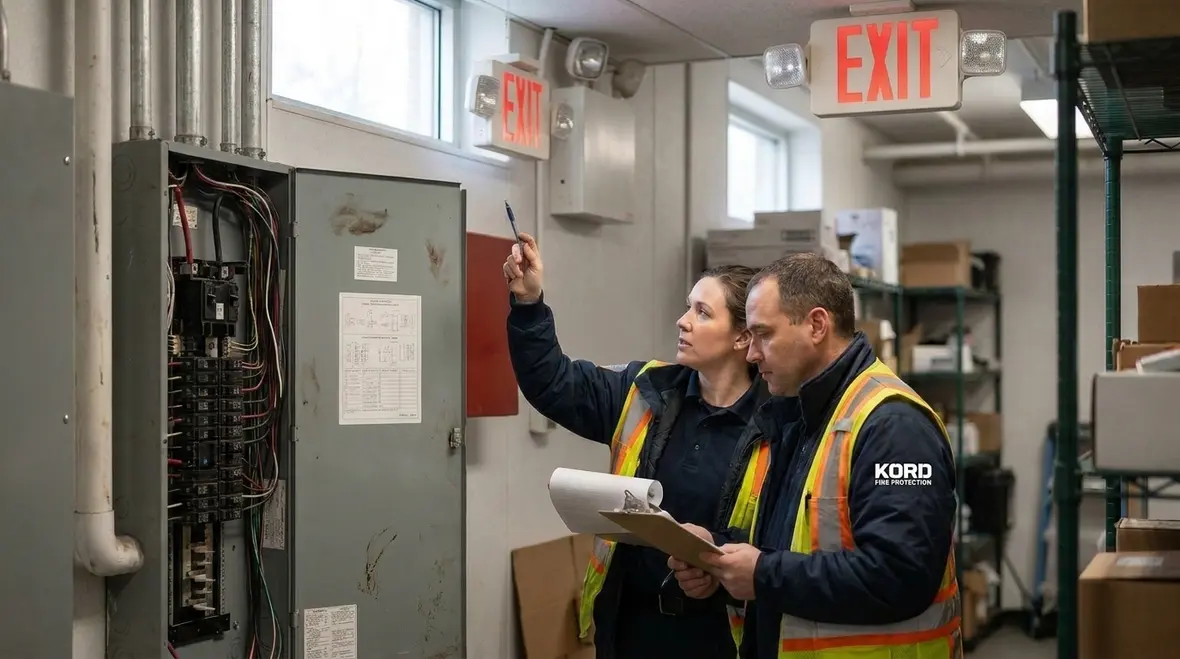
How Facilities Can Stay Ready
Industrial, retail, and commercial sites benefit from a clear emergency lighting plan. First, the system should be mapped against the building’s actual layout. Next, it should be tested on a set schedule. Then, records should be kept so inspections and maintenance can be tracked with ease. Finally, any upgrades should consider future changes to tenancy, storage, fitouts, or plant equipment.
This matters because buildings evolve. A clear exit route today may become crowded tomorrow after a new display, racking change, or refurb. Therefore, backup lighting fire safety should move with the site, not sit frozen in last year’s version of reality.
A readiness mindset beats a last-minute scramble
The strongest programs treat emergency lighting as something to review continuously, not only when an inspection date starts breathing down someone’s neck. That means checking routes after layout changes, confirming that batteries and heads remain functional, and coordinating lighting with other life safety systems. Kord Fire’s coordination and compliance strategy articles support this practical, system-wide approach to keeping egress reliable. ([kordfire.com](https://kordfire.com/coordinating-emergency-lighting-and-fire-safety-controls/?utm_source=openai))
FAQ
Final Word
NFPA 1 Section 14.13 makes one thing clear: emergency lighting must work when it matters most. That means proper design, steady testing, and reliable service. When facilities stay proactive, they support safer evacuation, smoother inspections, and fewer ugly surprises during real incidents.
Kord Fire Protection can help make that happen with expert support that keeps people safe and sites ready. If a building needs stronger emergency lighting compliance, now is the time to act, not after the lights go out and everyone starts improvising. Their emergency lighting resources and service pages make a practical next step for teams that prefer readiness over regret. ([kordfire.com](https://kordfire.com/emergency-lighting-for-fire-safety-and-reliable-service/?utm_source=openai))

Join Our Newsletter!
Get the latest fire safety tips delivered straight to your inbox From our Newsletter.