Fire Extinguisher Inspection Tag Guide for Safety
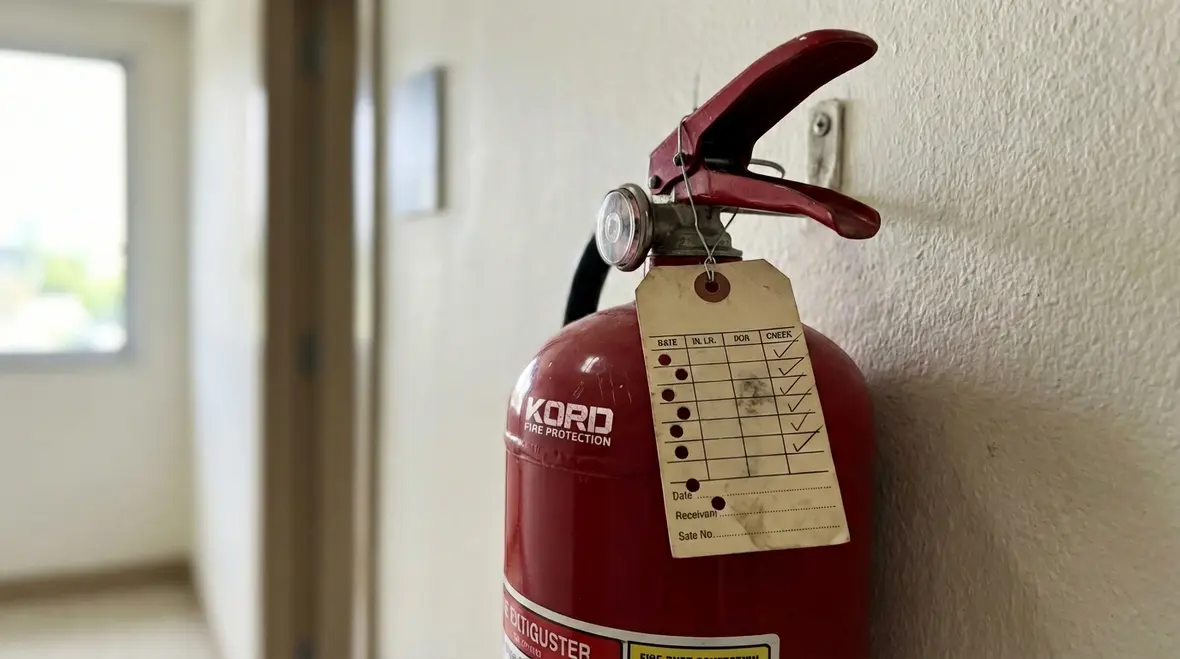
The room is quiet. A red cylinder waits patiently on the wall. Most people pass it every day without a second glance. Yet hanging from its neck is a small paper trail that tells a big story.
Within the first moments of any safety conversation, the Fire extinguisher inspection tag deserves a calm nod of respect. It is not decoration. It is a living record of care, compliance, and readiness. Kord Fire Protection technicians often explain it like a passport. Quietly official, easily overlooked, and absolutely required when it matters most. Moreover, this small tag speaks volumes about whether a building takes fire safety seriously or just hopes for the best.
Therefore, this guide slows things down. It explains what those tags mean, why they matter, and how trained professionals read them at a glance. Along the way, expect clarity, a little humor, and the kind of steady wisdom that makes even safety paperwork feel almost cinematic.

Fire Extinguisher Inspection Tag Basics Every Property Owner Should Know
At first glance, an inspection tag looks simple. However, simplicity is often where the smartest systems hide. This tag documents the health of a fire extinguisher over time. It shows when it was last checked, who checked it, and what actions were taken. In other words, it tells a story of responsibility.
Kord Fire Protection technicians explain that these tags exist for three audiences. First, they speak to building owners who need proof of care. Second, they guide technicians during future inspections. Third, they satisfy fire marshals who appreciate clear answers and dislike guessing games.
Moreover, inspection records are not optional flair. Local codes and national standards require routine checks. The tag keeps that history visible. Without it, even a perfectly working extinguisher can fail an inspection. That is a bit like having a valid drivers license but leaving it at home while driving. Technically fine. Practically a headache.
Therefore, understanding the basics helps owners avoid fines, delays, and awkward conversations that start with “I thought it was fine.”
If you are just getting started with extinguisher care, pairing this guide with a service-focused resource like “Is a expired fire extinguisher dangerouos?” can give further insight on expiration issues and how to handle them.

How to Read an Inspection Tag Without Guessing or Googling
The basic layout
Reading an inspection tag does not require secret training or a decoder ring. Still, many people feel unsure. Kord Fire Protection technicians often smile at this because once explained, it becomes obvious.

Most tags include the inspection date, the technician name or initials, and marks showing monthly or annual checks. Additionally, they may note pressure levels, condition of the hose, and whether the safety pin sat properly. Each mark means someone physically handled the extinguisher and confirmed it could perform.
Reading between the (blank) lines
Meanwhile, blank spaces tell their own story. If months pass without initials, that extinguisher has been ignored. Therefore, the tag becomes an early warning sign. It signals neglect long before smoke ever appears.
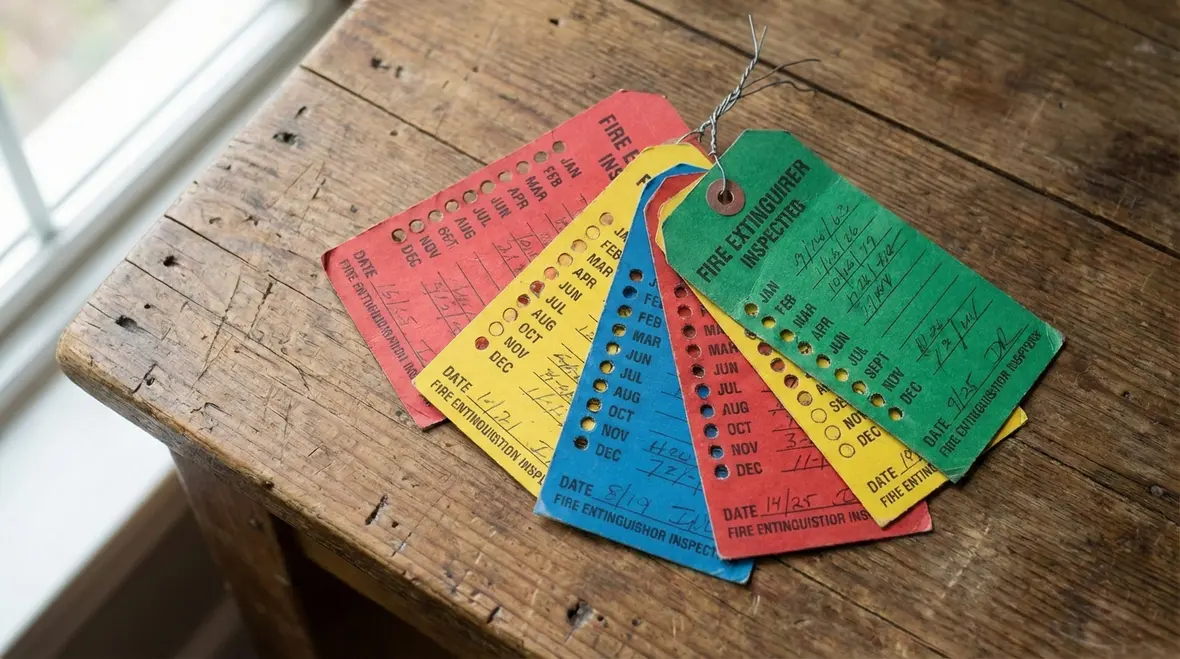
Also, many tags use simple punch holes or check boxes. This keeps things clear. Fire safety favors clarity over flair every time.

Why Fire Marshals Trust Tags More Than Promises
Fire marshals have heard every excuse imaginable. The dog ate the paperwork. The manager moved it. The inspector was coming next week. However, none of that matters when safety is on the line.
An inspection tag offers instant proof. It shows compliance without debate. Kord Fire Protection technicians stress that marshals trust what they can see and verify. A properly filled tag reduces inspection time and tension. That alone is worth its weight in calm.
Moreover, tags create accountability. Names and dates mean real people took real action. Therefore, safety becomes a shared responsibility rather than a vague intention.
Think of it as the difference between saying “I watched the movie” and showing a ticket stub. One feels a lot more believable.
What the Colors, Marks, and Notes Really Mean
Color codes and quick checks
Inspection tags often use color to show the year of service. This allows inspectors to spot outdated equipment quickly. Kord Fire Protection technicians explain that color coding saves time and prevents oversight. It is visual shorthand for safety.
Below is a simple breakdown presented clearly.
| Tag Detail | What It Tells You |
| Color of the tag | Indicates the service year for fast visual checks |
| Punched month | Shows monthly inspection completion |
| Technician initials | Identifies who performed the service |
| Written notes | Highlights repairs or concerns found |
Why every detail matters
Therefore, every detail matters. A missing punch or unclear note raises questions. Meanwhile, a clean and complete tag builds confidence instantly.
Also, handwritten notes may mention pressure adjustments or part replacements. These notes guide future service. They act like a diary entry for the extinguisher. Quiet. Honest. Useful.
The Role of Professional Technicians in Tag Accuracy
More than just filling in blanks
Tags do not fill themselves out. They rely on trained hands and sharp eyes. Kord Fire Protection technicians approach inspections methodically. They check pressure, seals, hoses, and mounting. Then, and only then, they update the tag.
Moreover, professionals understand code requirements that change over time. They know when hydrostatic testing is due and when replacement makes more sense than repair. Therefore, the tag becomes a reflection of expertise, not just effort.
Ethics, pride, and a little bit of humor
There is also an ethical side. A technician initials a tag knowing their name stands behind it. That creates care. It is similar to a chef sending out a dish with pride. No one wants their name attached to something half done.
Occasionally, a joke slips in during inspections. Something like “This extinguisher is older than that movie everyone pretends to love.” Humor aside, the message remains serious. Safety deserves attention.
Fire Extinguisher Inspection Tag Mistakes That Cause Real Problems
Common tag errors
Even small errors on an inspection tag can cause big trouble. Kord Fire Protection technicians see this often when they take over service from untrained providers.
- Skipped months where no initials or punches appear
- Unreadable writing that makes dates or names unclear
- Wrong tag colors used for the year of service
- Tags left attached even after an extinguisher fails inspection
Additionally, some tags remain attached after an extinguisher fails inspection. That sends mixed signals and confuses inspectors.
Why accuracy is non-negotiable
Therefore, accuracy matters. A wrong mark can invalidate an entire record. Meanwhile, consistent errors may lead authorities to question overall safety practices.
It is a bit like showing up to a formal event with gym shoes. One small mismatch overshadows everything else.
How Often Inspections Should Happen and Why Timing Matters
The rhythm of proper inspection
Fire extinguishers require regular attention. Monthly visual checks and annual professional inspections keep them ready. Kord Fire Protection technicians emphasize that timing is not arbitrary. It aligns with wear patterns and environmental exposure.
Moreover, extinguishers sit quietly until needed. That silence hides problems. Pressure can drop. Seals can crack. Therefore, scheduled checks catch issues early.
Also, inspection timing affects compliance. Missed months can trigger fines or force emergency servicing. Staying on schedule avoids stress and surprise costs.
In pop culture terms, this is the training montage. No one skips it and still wins at the end.
If an inspection tag ever makes you wonder whether your equipment is overdue for deeper service, it may be time to look into options like six-year breakdowns, hydrostatic testing, or full replacement through Kord Fire Protection’s fire extinguisher services.
How Inspection Tags Fit Into a Bigger Fire Safety Plan
One small piece of a big safety puzzle
An inspection tag is one piece of a larger system. Fire alarms, sprinklers, exit lighting, and training all work together. Kord Fire Protection technicians often remind clients that tags act as checkpoints within that system.
Moreover, consistent tagging supports insurance claims and legal defense. Documentation shows diligence. Therefore, when something goes wrong, records speak clearly.
Also, tags encourage routine. When staff see them updated, safety stays visible. It becomes part of the culture rather than a forgotten binder.
Ultimately, the tag is small, but its influence spreads wide.
FAQ About Fire Extinguisher Inspection Tags
Conclusion and Next Steps
Fire safety rewards preparation, not panic. A well maintained extinguisher and a clearly marked tag show quiet leadership. Kord Fire Protection technicians bring clarity, accuracy, and calm to a process many overlook. Therefore, now is the moment to review those tags on the wall. Ask questions. Schedule service. Let experienced professionals handle the details so safety stands ready when it matters most.
If any extinguisher tag looks questionable, faded, or missing altogether, do not wait for an inspection to point it out. Reach out to Kord Fire Protection’s fire extinguisher service team to schedule professional maintenance, replacement, or a full safety review tailored to your building.
Need to replace old or failed units?
Explore Kord’s comprehensive fire extinguisher services, including training, replacement, hydrostatic testing, and six-year breakdowns, so every tag in your building tells the same story: ready, compliant, and trusted.
Know Your Weapon Before You Fight the Flame
Kord Fire Protection is your go-to when it comes to all things fire protection. For over 20 years, we’ve been serving Southern California with the quality service and equipment to keep your home or business safe at all times. Our competitive prices reflect our unwavering commitment to protecting what matters most in the event of a fire emergency. Give us a call, send an email, or use that form!

Join Our Newsletter!
Get the latest fire safety tips delivered straight to your inbox From our Newsletter.