
NFPA 33 Section 8.3: Handling and Using Ignitible Liquids at the Point of Use
Quick Answer
NFPA 33 Section 8.3 focuses on preventing ignition hazards where ignitible liquids are actually transferred and used. Compliance depends on proper equipment selection, approved containers, grounded systems where required, controlled quantities, and inspection and maintenance that keep control measures effective over time.
For facilities that also need broader inspection and maintenance support, fire sprinkler inspection and maintenance services can fit naturally into a wider compliance strategy that keeps protection systems ready while point-of-use controls stay aligned with daily operations.
Why NFPA 33 Section 8.3 matters at the jobsite
Commercial facilities often manage flammable and combustible liquid risks primarily in storage and bulk transfer areas. NFPA 33 Section 8.3 shifts attention to the point of use, where daily operations create repeat opportunities for release, vapor accumulation, and ignition sources. This is especially critical for processes that dispense, mix, wipe down, service equipment, or clean with solvents and coatings in work zones.
For facilities seeking practical risk reduction, NFPA 33 ignitible liquid handling point of use controls should be treated as active system requirements, not one-time compliance items. The core challenge during audits is that point of use conditions change frequently: equipment is relocated, hoses wear, containers get replaced, and procedures drift. The facility must verify that protective measures remain effective under real operating conditions.
What Section 8.3 requires operationally for ignitible liquids
Section 8.3 targets handling and using ignitible liquids where they are accessed, dispensed, heated, or applied. In practical terms, compliance requires controlling ignition sources and limiting the likelihood and consequences of release. The facility typically demonstrates this through written procedures, proper placement of containers and equipment, and documented inspection and maintenance.
1) Control the amount at the point of use
Many facilities overstock supplies at workstations because it speeds production. NFPA 33 expectations at the point of use generally align with using the minimum quantities necessary for operations, with replenishment managed through controlled routes. Excess inventory increases both release volume and the time required for cleanup after spills.
Operationally, facilities reduce risk by implementing point-of-use limits tied to shift schedules, dispensing systems that prevent open pouring where feasible, and clear rules for returning unused product to approved storage.
2) Prevent spills and manage release outcomes
Point of use failures commonly involve degraded hoses, loose fittings, mismatched containers, and worn dispensing components. To meet Section 8.3 intent, organizations should ensure that containers are compatible with the liquid, caps and closures remain functional, and transfer methods do not create uncontrolled streams.
Facilities should also have spill response capability immediately available at the work area. Response materials must be appropriate for the chemistry and capable of addressing both liquid and vapor concerns while maintaining safe ignition controls.
3) Address ignition sources created by the process
Ignition control at the point of use must consider hot surfaces, static discharge, electrical equipment, friction and impact, and intentional sources such as heating devices. Even when the liquid itself meets combustible criteria, vapor concentrations and ignition energy can still produce rapid fire growth.
Common commercial gaps include non rated portable heaters near solvent use, unprotected extension cords, improper use of power tools, and grounding omissions when dispensing and transferring. These weaknesses frequently appear during routine operational changes, not during initial design.
Equipment and setup: how to design compliant point of use workflows
The safest approach uses engineered controls that reduce reliance on human behavior. For the NFPA 33 ignitible liquid handling point of use strategy, the facility should focus on container integrity, controlled dispensing, and safe electrical and mechanical interfaces.
Dispensing and transfer methods that reduce risk
Where practicable, facilities should use dispensing equipment designed for flammable liquid service rather than improvised containers. Examples include covered transfer funnels where compatible, metered pumps, approved drums and pails with compatible fittings, and closed or semi closed transfer methods that reduce vapor release.
Failure patterns often include:
- Loose or deteriorated hoses that leak at connection points
- Use of damaged caps and closures on solvent pails
- Adapters and fittings that are not designed for the chemical compatibility requirements
- Dispensing that requires open pouring with a high vapor release window
Bonding and grounding practices for static control
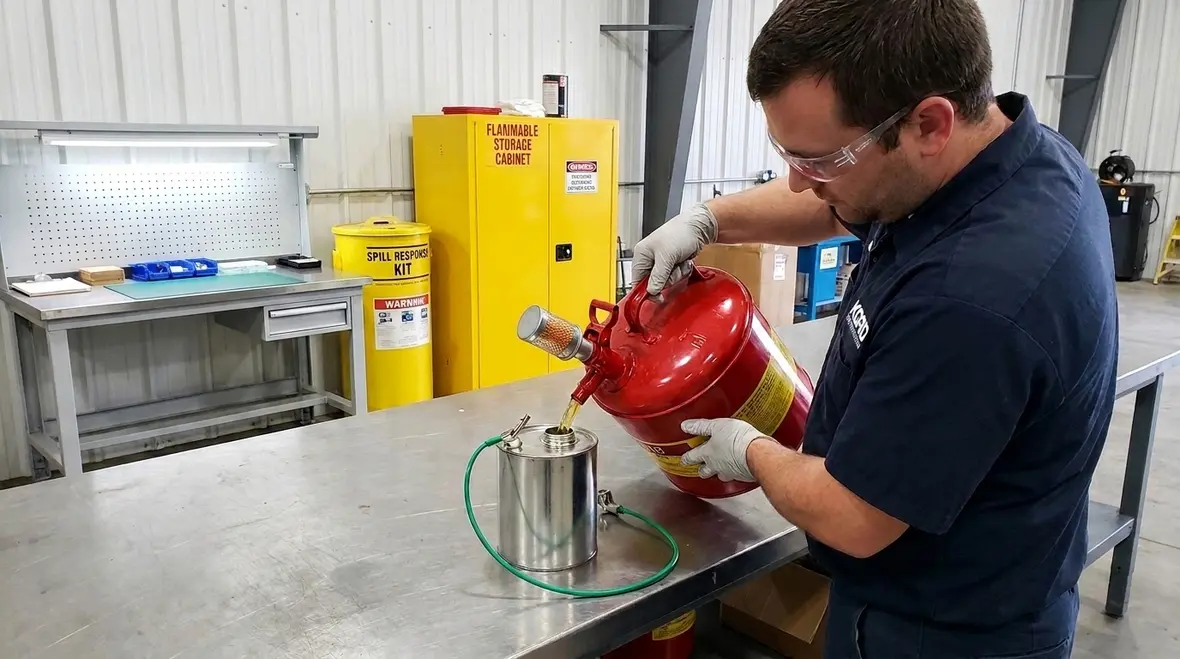
Static discharge remains one of the most preventable ignition drivers when the facility uses correct grounding and bonding practices for transfer and dispensing. Compliance requires more than installing a wire. The system must maintain continuity, provide reliable contact surfaces, and include verified attachment points that remain connected during routine use.
Workplace inspections should verify that bonding clamps are accessible, not missing, and not bypassed. Replace corroded connectors and inspect continuity as part of ongoing maintenance, not only after incidents.
Electrical and mechanical equipment interface
At the point of use, electrical equipment must be compatible with the hazard. Facilities often have correct-rated equipment in storage areas, but not in service bays, maintenance rooms, retail backrooms, or mixing stations. Verify that cord and plug connections, lighting, switches, and portable equipment meet the required hazard classification and installation requirements for the area.
Mechanical controls also matter. Improper cart design, uncontrolled friction contacts, or frequent repositioning of containers can undermine static and spill controls. The facility should standardize workstation layouts to keep ignition control measures in place.
Inspection, testing, and maintenance: preventing drift over time
Point of use controls fail most often when maintenance gaps appear. NFPA 33 compliance at the point of use should include recurring checks for equipment condition, procedure adherence, and the continued effectiveness of ignition controls.
Daily and periodic inspection focus areas
Facilities commonly build inspection rounds around these operational points:
- Container condition, closures, and gasket integrity
- Hose and fitting wear, leaks, and clamp integrity
- Bonding and grounding continuity and proper attachment locations
- Condition of dispensing pumps and meters
- Area housekeeping, including spill cleanup readiness and vapor control practices
- Electrical equipment condition and cord management
To keep inspections meaningful, the facility should document results, track corrective actions, and verify closure with follow-up checks.
Common compliance failure points during walkthroughs
During commercial facility inspections, the same issues repeatedly surface:
- Approved containers used incorrectly or left open longer than procedures allow
- Spill kits placed in storage areas instead of at the workstation
- Improvised transfer containers without compatible caps or fittings
- Damaged grounding straps or missing bonding clamps
- Transient ignition sources introduced during maintenance activities
Kord Fire Protection supports ongoing compliance by performing point of use oriented inspections and maintenance verification that align with commercial operating realities. This helps facilities avoid compliance drift by identifying degradation early and supporting corrective actions before hazards escalate.
If your facility is dealing with broader liquid-fuel risk management too, Kord’s related article on layered fire protection for flammable liquids helps connect point-of-use controls with containment, suppression, and overall facility planning.
Building a practical compliance program for commercial sites
Section 8.3 alignment requires a program that connects engineering controls, procedures, and workforce training. The goal is to maintain safe conditions throughout daily operations, not just during initial commissioning.
Procedures that hold up to day-to-day operations
Written procedures should cover receiving, staging, dispensing, use, and return of ignitible liquids at each relevant point of use. They should specify:
- Accepted container types and compatibility requirements
- Approved dispensing methods and limitations on open pouring
- Bonding and grounding steps, including when they apply
- Spill response steps and reporting thresholds
- Housekeeping expectations, including removal of waste and rags
Training and accountability
Training should be role based, including maintenance staff, line supervisors, and any contractor who performs solvent handling. Facilities should reinforce the “why” behind each control, because point of use tasks often change during production schedules and repairs.
Integrate point of use controls with hot work and maintenance coordination
Many ignition events occur when process changes introduce new ignition sources. Facilities should ensure point of use controls integrate with hot work permits and maintenance coordination so that solvents and ignition sources do not coincide.
If your organization wants guidance on aligning fire prevention strategies across the facility, Kord Fire Protection provides resources on broader fire safety planning through Kord Fire Protection.
Frequently Asked Questions
Conclusion and next steps
NFPA 33 ignitible liquid handling point of use compliance succeeds when engineered controls, disciplined procedures, and inspection maintenance work together. Conduct a point of use walkthrough, verify bonding and grounding effectiveness, confirm container and dispensing integrity, and ensure ignition source controls remain active during real operations. Then partner with Kord Fire Protection to support ongoing inspections, testing, and corrective action tracking so your commercial facility stays compliant throughout daily production cycles.

Join Our Newsletter!
Get the latest fire safety tips delivered straight to your inbox From our Newsletter.



