
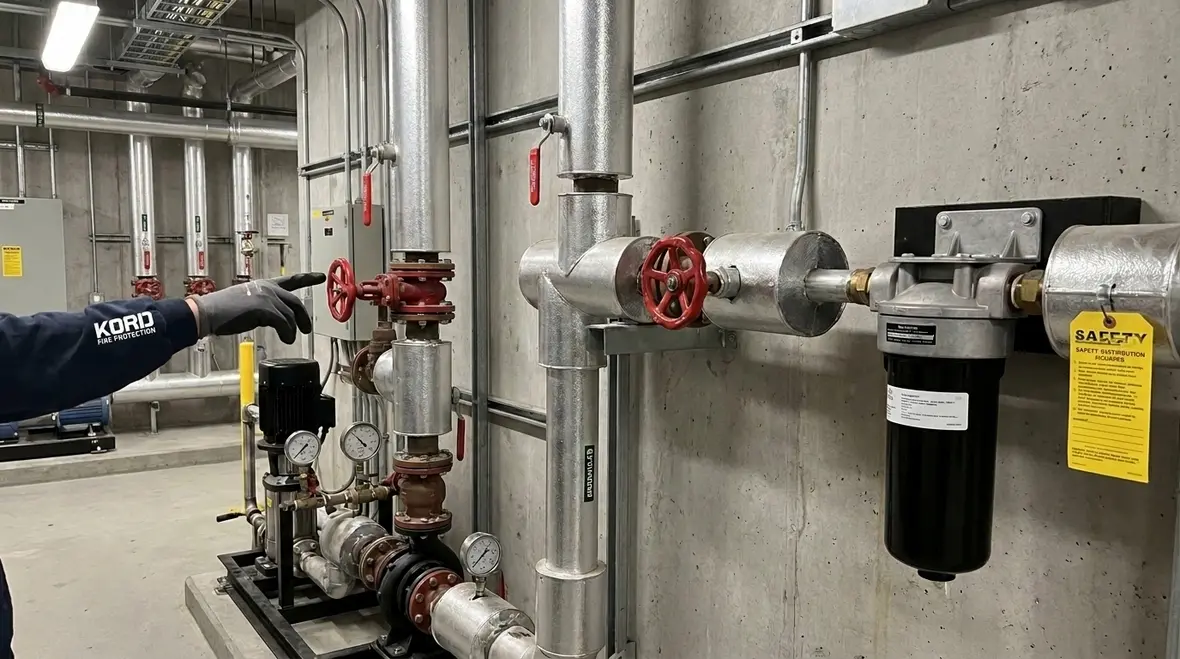
NFPA 31 Section 9.1: Scope of the Oil Distribution Systems Chapter
Quick Answer
NFPA 31 Section 9.1 establishes what the Oil Distribution Systems chapter covers and where its rules apply across commercial, industrial, and retail occupancies. The scope clarifies the system boundaries, intent for safe fuel delivery, and the compliance focus for piping, fittings, valves, and related components.
For facilities tightening up broader inspection and maintenance planning, inspection, testing, and maintenance support can help standardize documentation, service scheduling, and compliance workflows across connected building systems.
Why Section 9.1 Matters for the NFPA 31 chapter 9 oil distribution systems scope
NFPA 31 Section 9.1 is the starting point for applying the Oil Distribution Systems chapter correctly. It prevents facilities from treating the chapter as a generic checklist while ignoring the actual system boundaries defined by NFPA 31. From a compliance standpoint, Section 9.1 guides installers, inspectors, and maintenance teams toward the right components and the right operating conditions, especially where multiple buildings, shared manifolds, or frequent service interruptions can increase risk.
In practical terms, the NFPA 31 chapter 9 oil distribution systems scope determines how far the code requirements extend along the fuel path and what types of distribution arrangements must follow the chapter’s performance intent. That scope also affects how facilities document inspections, maintain records, and respond to leaks, contamination events, and degraded components that can compromise safe fuel flow.
What Section 9.1 typically includes in the distribution system boundary
Section 9.1 defines the portion of the fuel supply chain governed by the oil distribution systems rules. While exact language depends on the edition and any referenced definitions, the scope concept remains consistent: it covers the elements involved in moving oil from storage or supply toward the burner or appliance connection, including the arrangement and control of flow.
For commercial and industrial facilities, the practical compliance challenge is mapping the “jurisdictional boundary” across site realities, such as:
- Multiple tanks, pump skids, or remote fill stations serving different equipment rooms.
- Run lengths and elevations that create air entrainment or vapor pockets during start up.
- Branch lines that feed more than one burner, furnace, or process heater.
- Valve manifolds used for isolation, maintenance, and seasonal changeover.
A common failure point is treating only the final run to the burner as subject to the chapter while informal piping changes, added quick disconnects, or unlisted fittings bypass the intended controls. When that happens, inspections often uncover noncompliant modifications that do not align with the scope boundary defined by Section 9.1.
How the scope drives compliant design and installation decisions
When Section 9.1 is applied correctly, it influences design decisions that affect inspection outcomes and long term reliability. Even when a facility has “operational approvals,” the maintenance team still must ensure the system remains in the same safe configuration as installed.
1) Piping routing, protection, and segregation
Oil distribution piping requires attention to routing and protection from mechanical damage and heat exposure. In retail back-of-house spaces and light industrial plant rooms, piping frequently shares corridors with traffic, storage, or cable trays. The scope concept in Section 9.1 pushes the facility to treat the distribution run as a defined system, not scattered segments installed over time.
2) Valves, isolation points, and safe shutdown
Isolation valves and control components support safe maintenance and emergency shutdown response. The scope in Section 9.1 makes the system boundary clear so technicians can verify that the isolation points are placed where they can actually secure flow during servicing.
A frequent operational problem is the use of convenience valves or partially restrictive fittings added during troubleshooting. These can prevent complete isolation, worsen leakage during pressure transients, or create dead legs where sludge and sediment accumulate.
3) Connection methods and fittings integrity
Within the distribution scope, the connection method and fitting integrity matter because the system can experience pressure variations, thermal cycling, and vibration. Over time, gasket aging, thread sealant incompatibility, and improper torque can contribute to seepage that only appears under specific burner firing conditions.
Commercial inspections often identify small leaks at joints that were “good enough” during installation but later failed after fuel quality changes, tank water events, or filter service was delayed.
Inspection and maintenance: what compliance teams should verify inside the scope
Correctly aligning field work with the NFPA 31 chapter 9 oil distribution systems scope changes the inspection and maintenance workflow. Instead of checking only visible components at the burner, competent service teams verify the full distribution path boundaries defined by Section 9.1 and the system intent.
Operational checks that catch hidden deterioration
- Verify that isolation valves within the distribution boundary fully close and remain leak tight under expected operating conditions.
- Confirm that suction and discharge conditions in pump fed arrangements support stable priming and prevent air ingestion or cavitation.
- Inspect for filter bypass indicators, sediment carryover, and changes in burner flame behavior that correlate with distribution issues.
- Check for signs of intermittent leaks during heat soak and cool down, not just during initial start up.
Documented maintenance and change control
Facilities in retail, hospitality, warehouses, and industrial plants often modify oil systems after commissioning. Section 9.1 scope awareness supports change control by ensuring new components and field alterations remain within the chapter’s intent. Without that discipline, facilities end up with “patchwork” fuel paths that may pass an immediate visual check but fail under pressure testing, hold time verification, or routine seasonal inspection.
Kord Fire Protection supports ongoing compliance through structured inspection, testing, and maintenance scheduling aligned with commercial facility operations. That includes helping facilities maintain continuity in how the oil distribution system is evaluated after repairs, replacement of filters, burner service, and seasonal changeovers.
You can also support your installation and maintenance planning with practical guidance on oil burning equipment installation practices here: NFPA 31 practical guide to oil burning equipment installation.
Common compliance pitfalls tied to misunderstanding Section 9.1 boundaries
Misapplication of Section 9.1 usually shows up as recurring issues rather than one dramatic failure. These are the most frequent patterns encountered in commercial and industrial environments:
1) Work performed outside the “real” system boundary
Technicians may focus on the burner connection while modifications to manifolds, quick connects, or intermediary valves fall under the distribution system scope. That gap can lead to inconsistent isolation, leakage, and noncompliant component selection.
2) Uncontrolled air and contamination problems
Air entrainment and sediment accumulation can stem from suction conditions, poor venting behavior, or degraded filters. If the distribution system scope is not recognized, these issues get treated as burner problems rather than distribution system causes.
3) Incomplete documentation after service events
Many facilities keep service records for burner tuning but not for distribution system checks. Section 9.1 scope awareness supports consistent documentation of valve condition, joint integrity, filter service intervals, and functional verification after maintenance.
How Kord Fire Protection helps facilities maintain ongoing compliance
Compliance does not end at installation. Fuel distribution systems operate continuously through seasonal cycles, maintenance windows, and operational upsets. Kord Fire Protection acts as a practical partner for commercial and industrial facilities by supporting recurring inspections, testing, and maintenance practices that align with the intent of NFPA 31, including how the oil distribution system boundary is managed after repairs and replacements.
For teams standardizing service across multiple sites, a consistent inspection approach reduces the risk of scope drift caused by contractor turnover, patch repairs, or undocumented piping changes. Kord Fire Protection helps keep the system configured to perform as intended and remain verifiably safe over time.
Frequently Asked Questions
Conclusion and call to action
NFPA 31 Section 9.1 sets the boundary that determines what the oil distribution rules actually govern. Facilities that map that boundary into installation records and maintenance procedures reduce leak risk, improve isolation reliability, and strengthen inspection outcomes. Kord Fire Protection can help your team verify oil distribution system compliance, support testing and maintenance, and keep service documentation aligned with NFPA 31 expectations. Contact Kord Fire Protection to schedule a targeted review.

Join Our Newsletter!
Get the latest fire safety tips delivered straight to your inbox From our Newsletter.



