
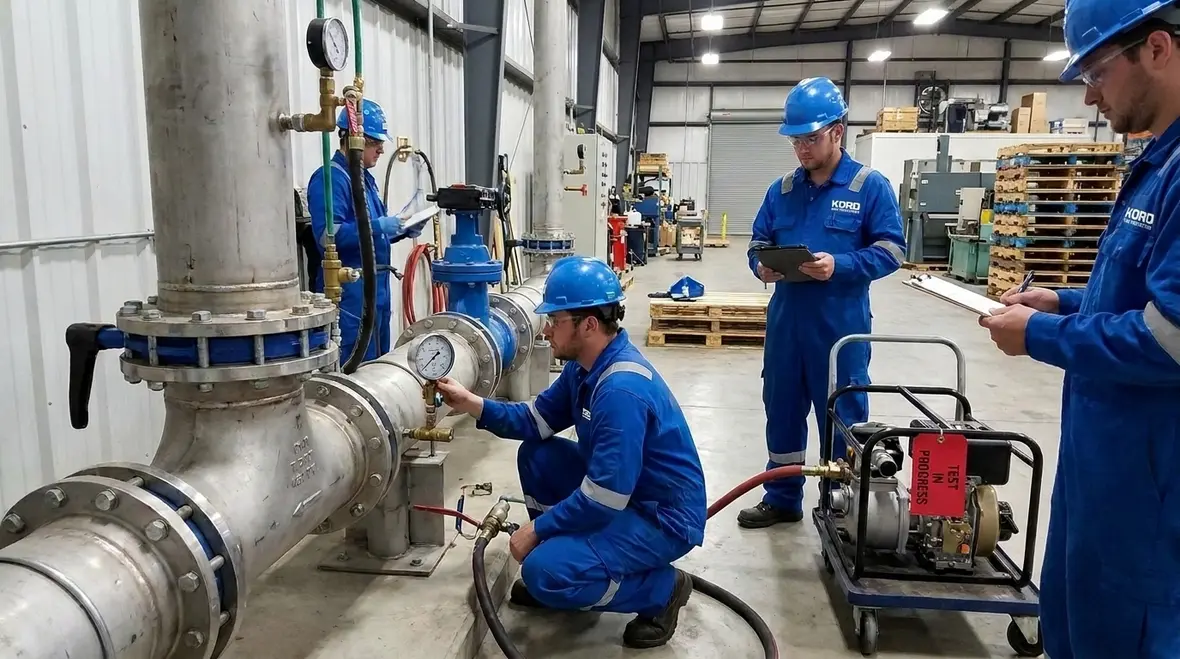
NFPA 30 Section 27.7: Testing Liquid Piping Systems
Quick Answer
NFPA 30 Section 27.7 piping system testing specifies how commercial facilities should verify tightness and integrity of liquid piping used for flammable and combustible liquids. It focuses on pressure or leak testing methods, procedural controls, documentation, and readiness to correct deficiencies before systems return to service.
Why NFPA 30 Section 27.7 piping system testing matters in real facilities
Commercial, industrial, and retail environments often rely on flammable liquid transfer and storage systems that operate close to ignition sources, maintenance activity, and high foot traffic. NFPA 30 Section 27.7 piping system testing exists to manage the most common risk: undetected leaks, weak joints, or piping damage that can develop during installation, modification, or repairs.
In day to day operations, the compliance challenge is not simply performing a test. The challenge is performing the correct test with the right controls, in the right sequence, with verification that supports safety, operational continuity, and audit readiness. Facilities also must align testing practices with internal commissioning standards, contractor documentation, and ongoing maintenance requirements.
For facilities that want a broader support path around inspection, testing, and documentation, Kord Fire also offers fire protection services in Southern California that fit naturally alongside piping integrity planning and compliance workflows.
What Section 27.7 covers: scope, intent, and acceptance outcomes
NFPA 30 Section 27.7 addresses testing of liquid piping systems to confirm integrity and tightness. The intent focuses on ensuring that piping constructed or altered for flammable liquid service can safely contain the intended liquid under conditions for which it is designed.
In practice, the acceptance outcome hinges on three themes:
- Controlled test setup that prevents unintended release during pressurization.
- Accurate pressure and leak verification using suitable instrumentation.
- Clear pass or fail criteria that drive corrective action before re energization or return to service.
When facilities track each test against the system design, they reduce the likelihood of repeat testing, rework, and operational downtime. This documentation also supports incident investigations and insurer or AHJ reviews.
How testing is commonly executed: methods, sequencing, and controls
Section 27.7 testing is not a one size exercise. The method selection typically depends on system design, operating intent, configuration, and the practical limitations of the facility. Effective testing programs also follow a logical sequence that prevents concealment of defects and avoids damaging components not intended to be stressed.
1) Pre test verification of the piping system
Before any pressure or leak test, qualified teams confirm that the piping system matches approved documentation and that components are appropriate for the test conditions. Typical pre test checks include:
- Valve positions staged to isolate or protect sections as required by the test plan.
- Gaskets, flanges, fittings, and threaded connections inspected for proper installation.
- Pressure rating verification to avoid overstressing instrumentation, regulators, relief devices, or specialty components.
- Clear understanding of where the system is supported and restrained so expansion and movement do not create false failures.
2) Pressurization and leak detection strategy
Pressurization must be controlled and measured with suitable instrumentation that can demonstrate repeatable results. Leak detection typically includes visual observation and, where appropriate, methods that confirm the absence of seepage at joints and connections.
Common failure points in liquid piping systems include:
- Threaded joint leak paths due to inadequate engagement or sealant issues.
- Flange surface imperfections or incorrect gasket selection.
- O rings displaced during assembly or not rated for the liquid service conditions.
- Misalignment at pipe spools leading to stress and micro gaps that open under test pressure.
- Damage introduced during installation, such as denting, scraping, or loose clamps.
3) Safe test conditions and environmental controls
Commercial facilities often test during scheduled windows to minimize operational disruption. That creates pressure to compress procedures. A compliance focused testing program preserves safety by implementing:
- Work area control to prevent ignition sources and unauthorized access.
- Vent and relief management so that any unexpected discharge remains controlled.
- Communication protocols for maintenance personnel, operators, and supervisors.
- Lockout and isolation where needed to prevent introduction of liquid or ignition sources during testing.
Documentation and audit readiness: what inspectors expect to see
Successful compliance relies on traceability. Facilities should maintain complete records for every phase of NFPA 30 Section 27.7 piping system testing, including pre test checks, test setup details, results, and corrective actions.
Well prepared documentation usually includes:
- System identification, drawings or schematics referenced, and test locations.
- Test method description and rationale for method selection.
- Instrumentation details, calibration status, and measurement readings.
- Date, duration, observed conditions, and final pass or fail outcome.
- Photographs or marked drawings showing leak locations and repairs when deficiencies are found.
From a maintenance standpoint, strong records also support trend analysis and reduce the time needed for re commissioning after repairs or component replacement.
Common commercial compliance challenges and how to prevent them
Many failures during NFPA 30 Section 27.7 piping system testing programs come from preventable operational friction. In commercial facilities, the biggest drivers are schedule pressure, mixed contractor scopes, and incomplete handover information.
Challenge 1: Incomplete system knowledge during modifications
During tenant changes, retrofit projects, or pump replacement work, teams sometimes inherit partial as built information. When testing begins without a confirmed line list, valve map, and component inventory, failures become harder to interpret and repairs become more time consuming.
Challenge 2: Test equipment and instrumentation limitations
Facilities sometimes use gauges that do not meet the accuracy needs for the selected method, or they omit calibration verification. That can create inconclusive results and unnecessary re testing, which affects operational continuity.
Challenge 3: Component overstress and incorrect isolation
Relief devices, regulators, and sensitive instrumentation can be damaged if isolation staging is incorrect. A structured test plan avoids secondary damage that can turn a simple leak repair into a full equipment replacement.
Challenge 4: Delayed correction after a marginal leak observation
Marginal leak indications often get dismissed to avoid downtime. That decision increases risk because the test may have identified a defect that continues to worsen under operating conditions. Corrective action should be prompt and verified by re test.
For related compliance context on how NFPA 30 regulates flammable liquids, facilities can review: how NFPA 30 regulates flammable liquids. Integrating that broader regulatory view strengthens how teams plan testing, maintenance, and operating controls across the whole system.
How Kord Fire Protection supports NFPA 30 compliance for piping testing
Kord Fire Protection positions testing as part of a continuous compliance program, not a standalone event. For commercial properties, that approach matters because piping systems evolve due to repairs, equipment swaps, and operational changes.
Kord Fire Protection supports facilities by helping them:
- Plan the test method and sequence to protect system components and reduce rework.
- Verify readiness prior to pressure or leak testing to avoid preventable failures.
- Produce inspection ready documentation aligned with commercial audit expectations.
- Close out findings with corrective actions and verified re testing when required.
This service model helps reduce operational downtime, improves consistency across projects, and supports stronger ongoing maintenance outcomes for flammable liquid systems.
Frequently Asked Questions
Call to action
To keep your flammable liquid piping compliant and operationally reliable, schedule an NFPA 30 testing review and documentation check before your next modification or commissioning window. Kord Fire Protection can help plan NFPA 30 Section 27.7 piping system testing, manage readiness, and close findings with verified re testing. Contact Kord Fire Protection today to reduce downtime, improve audit defensibility, and strengthen safety performance across your facility.

Join Our Newsletter!
Get the latest fire safety tips delivered straight to your inbox From our Newsletter.



