
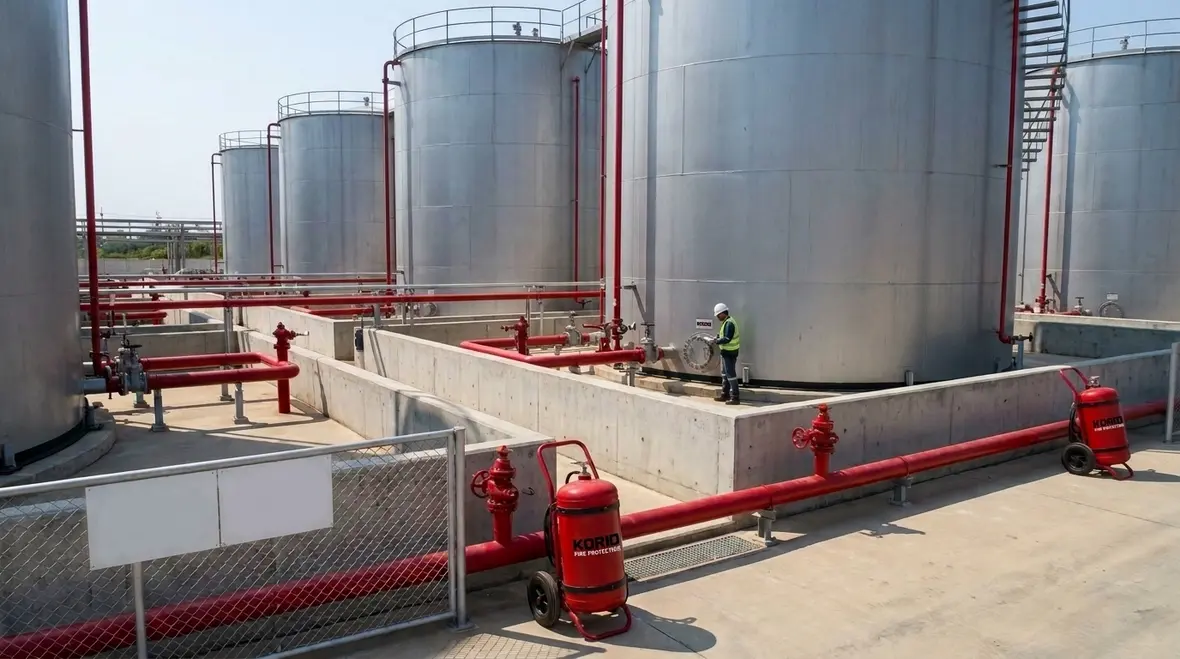
NFPA 30 Section 21.6: Fire Prevention and Control at Tanks
Quick Answer
NFPA 30 Section 21.6 sets out practical fire prevention and control expectations for flammable liquid storage tanks. It focuses on keeping tank areas controlled, managing ignition sources, maintaining systems and equipment, and ensuring emergency response readiness to limit incident scale.
For facilities reviewing suppression readiness near tank hazards, fire suppression system services can help frame what ongoing inspection, testing, and repair support should look like in practice.
What NFPA 30 Section 21.6 tank fire prevention is trying to prevent
NFPA 30 Section 21.6 tank fire prevention addresses the specific hazards created when large volumes of flammable liquids are stored in tanks. The risk is not only tank failure. It also includes vapor ignition, fire spread to secondary equipment, and loss of containment during abnormal operations.
For commercial, industrial, and retail facilities, the most common compliance problems involve operational drift. Tank farms and loading areas accumulate “temporary” conditions, ignition sources creep in through maintenance activities, and protection systems are not tested with the frequency and documentation expected by enforcement authorities. Section 21.6 aims to prevent that drift by requiring consistent fire prevention controls, reliable detection and control measures, and defensible emergency preparedness.
Key fire prevention controls for tank areas (the operational lens)
Facilities often treat tank fire protection as an equipment purchase, but Section 21.6 is operational. Compliance typically hinges on day to day controls that keep ignition potential low and keep consequences limited if ignition occurs.
1) Manage ignition sources around tanks and appurtenances
Tank tops, dike areas, and loading manifolds create zones where flammable vapors can exist. NFPA 30 expectations generally require strict control of ignition sources through procedures and practices, including:
- Hot work controls with permit issuance, verification, and post work monitoring where vapors may be present.
- Grounding and bonding practices during transfer and maintenance to reduce static discharge ignition risk.
- Housekeeping and control of combustible accumulations, including control of oily rags, debris, and materials that can contribute fuel load.
- Equipment selection and maintenance to prevent unintended sparks, malfunction, or overheated surfaces near tank openings and vents.
2) Control release pathways and keep containment effective
Many incidents begin with a small release that becomes a vapor cloud. Preventing tank fire escalation depends on keeping containment systems and drainage behavior predictable. Facilities should verify that:
- Secondary containment, dikes, and sumps function as designed and do not allow uncontrolled migration.
- Blocked or degraded drains are corrected before they impair emergency response and cleanup operations.
- Vent and relief arrangements remain free of obstructions and maintained to prevent improper venting behavior.
Fire control and protection expectations: systems that must work when needed
Fire prevention measures reduce ignition likelihood, but Section 21.6 also expects control capabilities that limit fire growth. For most tank installations, this means the practical reliability of detection, alarms, fire suppression or control measures, and the readiness of personnel and responders.
Detection, alarm, and response coordination
Commercial facilities usually need a coherent alarm strategy that triggers the right actions quickly. That includes:
- Clearly defined alarm recipients and notification pathways.
- Documented response procedures aligned to the tank hazards present.
- Testing and inspection records that show ongoing operability rather than “as found” evidence only.
Suppression and control effectiveness
Where suppression systems exist, the operational focus should be on performance, not just presence. Common failure points include valves that are not exercised within interval requirements, blocked nozzles, system isolation that is left in the wrong position after maintenance, and incomplete documentation of restored readiness.
Because enforcement and insurance reviews often look for repeatable evidence, facilities should treat suppression readiness like a production critical system, with scheduled testing, documented inspections, and corrective action tracking.
Inspection and maintenance: what typically drives compliance success
NFPA 30 Section 21.6 tank fire prevention compliance usually improves when the facility implements a rigorous inspection and maintenance rhythm. Inspectors and auditors typically look for consistency across equipment condition, procedural compliance, and training records.
High value inspection areas
To reduce the most frequent risk gaps, focus inspections on:
- Tank openings and vents, including verification that vents and closures are operational and protected against obstruction.
- Fire protection system components, including pumps, controls, actuation devices, detectors, and connections.
- Electrical classification and condition of equipment in relevant areas, including inspection for damage and deterioration that could increase ignition likelihood.
- Hot work and maintenance interfaces, including permit controls and post work verification steps.
Maintenance documentation and traceability
Facilities frequently fail compliance not because systems are absent, but because maintenance records do not show that systems are returned to verified operating condition after work. A strong documentation package typically includes inspection reports, test results, corrective actions, and evidence of restored readiness.
For additional context on how NFPA 30 regulates flammable liquids across site conditions, see how NFPA 30 regulates flammable liquids.
Common tank fire prevention failure modes (and how to close them)
Experience shows that tank fire events often follow recognizable patterns. Addressing these patterns is a direct way to strengthen NFPA 30 Section 21.6 tank fire prevention readiness.
Failure mode 1: Incomplete change management
Temporary layout changes, added equipment, altered piping, and modified maintenance workflows can introduce ignition sources or block protective systems. A closed loop change management process should trigger impact review on ignition control, emergency access, and protection system configuration.
Failure mode 2: System isolation left in place
Valves and isolation points used for maintenance can remain in incorrect positions after work completion. Facilities should require verification steps before returning to service and include spot checks that detect “left open” or “left isolated” conditions.
Failure mode 3: Housekeeping that increases fuel load
Combustible waste, oily residue, and debris near tank areas can accelerate fire growth and complicate firefighting operations. Consistent waste removal schedules and defined “no storage” boundaries in dike and loading zones help eliminate hidden fuel sources.
Failure mode 4: Training that does not match the current site
Procedures often drift from actual operations when equipment upgrades or control strategies change. Training should verify competency on the site’s current valves, alarms, shutoffs, and emergency actions.
How Kord Fire Protection supports ongoing compliance
Kord Fire Protection helps commercial facilities maintain defensible NFPA 30 alignment through practical site assessment, testing support, and documentation that enforcement and insurance stakeholders expect. This approach helps reduce “paper compliance” and supports real operational readiness.
Typical service outcomes include identification of gaps that affect NFPA 30 Section 21.6 tank fire prevention readiness, coordinated inspection and testing planning, and corrective action support to restore systems to verified service conditions.
For Australian customers seeking a partner for ongoing compliance, maintenance, and testing support, the team at kordfire.com.au can assist with structured compliance programs.
Frequently Asked Questions
Next step: validate your NFPA 30 Section 21.6 tank fire prevention readiness
Do a fast gap check of tank area ignition controls, housekeeping, change management, and protection system readiness. Then align inspection, testing, and documentation to the site’s actual configuration. Contact Kord Fire Protection to help verify compliance, plan corrective actions, and maintain evidence of ongoing readiness so your tank fire prevention program stands up to audits and real emergencies.

Join Our Newsletter!
Get the latest fire safety tips delivered straight to your inbox From our Newsletter.



